Tony Hale and Team Draw an Utterly Original Sketch
An original family adventure about grief, imagination, and the courage to make something strange.
At Wedgwood Circle, we champion art that is good, true, and beautiful in service of the common good. Sketch is a rare example of all three. Equal parts funny, frightening, heartfelt, and wildly imaginative, the film follows a young girl whose dark drawings come to life, forcing her family to confront grief, fear, and healing in unexpected ways.
Written and directed by Seth Worley, Sketch represents something increasingly uncommon in today's entertainment landscape: a wholly original film made for audiences of all ages.
We sat down with actor and producer Tony Hale, producer Dusty Brown, and producer Steve Taylor to discuss the eight-year journey to bring the film to life, the challenges of making original stories, and why community matters more than ever.
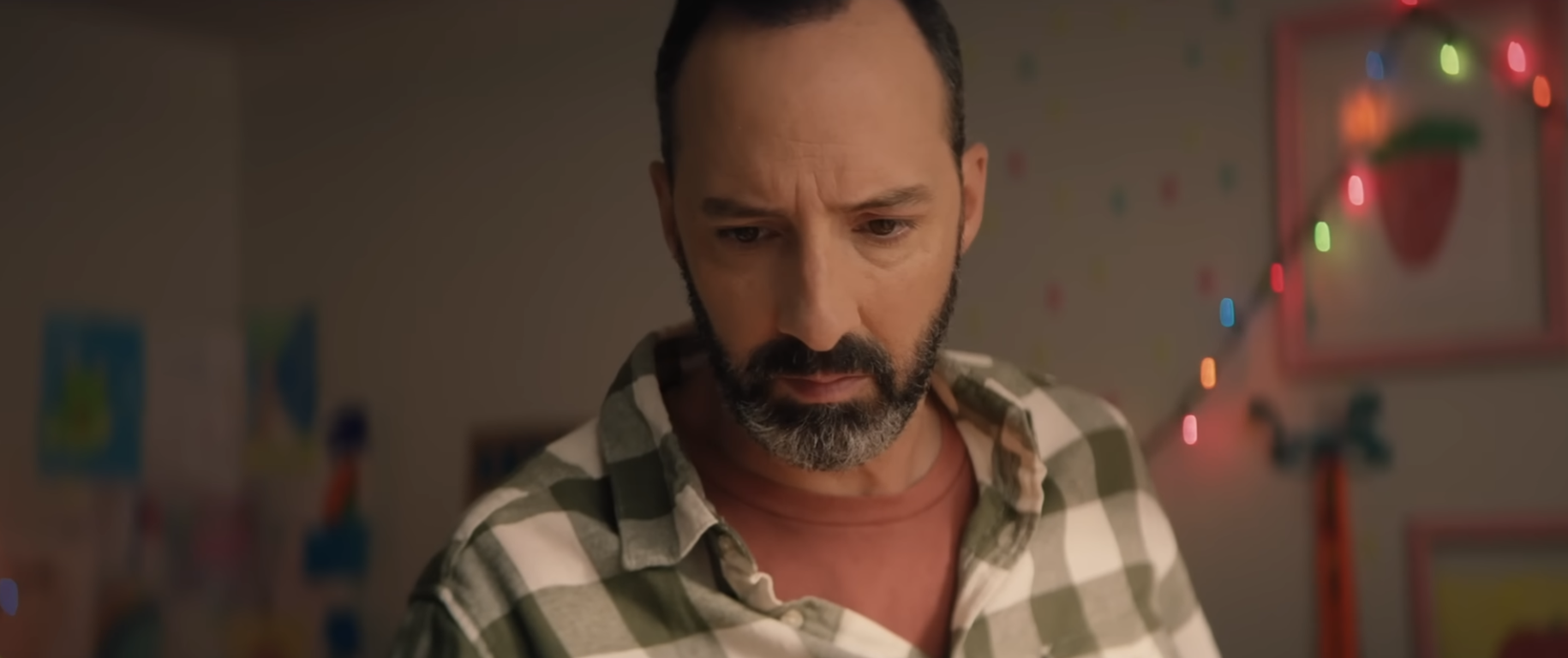
Tony Hale in Sketch. Image courtesy of Angel Studios.
Eight Years in the Making
Tony Hale: We've been working for eight years to get this made. It's been a long journey.
Director Seth Worley brought Steve and me half of a script that was originally called Darker Colors. It was about a young girl drawing these comically dark pictures that come to life. At its core, it deals with grief, but it's also a fun family adventure movie.
It took years to secure financing. Then production took time. Then post-production took time. To finally be at this point feels surreal.
You spend so long nurturing something like this that eventually it feels like you're sending your child into the world and saying, "Please be kind to my kid."
We're incredibly proud of it.
Following a Clear Creative Vision
Wedgwood Circle: What attracted you to the project, Dusty?
Dusty Brown: When you're working with someone who has a vision as clear as Seth's, your job becomes helping that vision come to life. He knew what he wanted in every area, from marketing and casting to editing and visual effects.
That clarity was inspiring.
Tony Hale: Seth also comes from a visual effects background, and you can see that throughout the film. Every monster reflects the medium used to create it. Some are chalk, some are crayon, some are Sharpie, some are glitter. Those textures actually appear in the creatures themselves.
Dusty Brown: It's also deeply personal for Seth. This isn't just a fun concept. It's rooted in experiences from his own life.
Tony Hale: His sister went through a difficult bullying situation as a child and coped by drawing dark pictures. A therapist encouraged her to express those feelings on paper rather than suppress them.
That idea became one of the emotional foundations of the film.
"It's better to put those things on the page than let them stay in your head and fester."
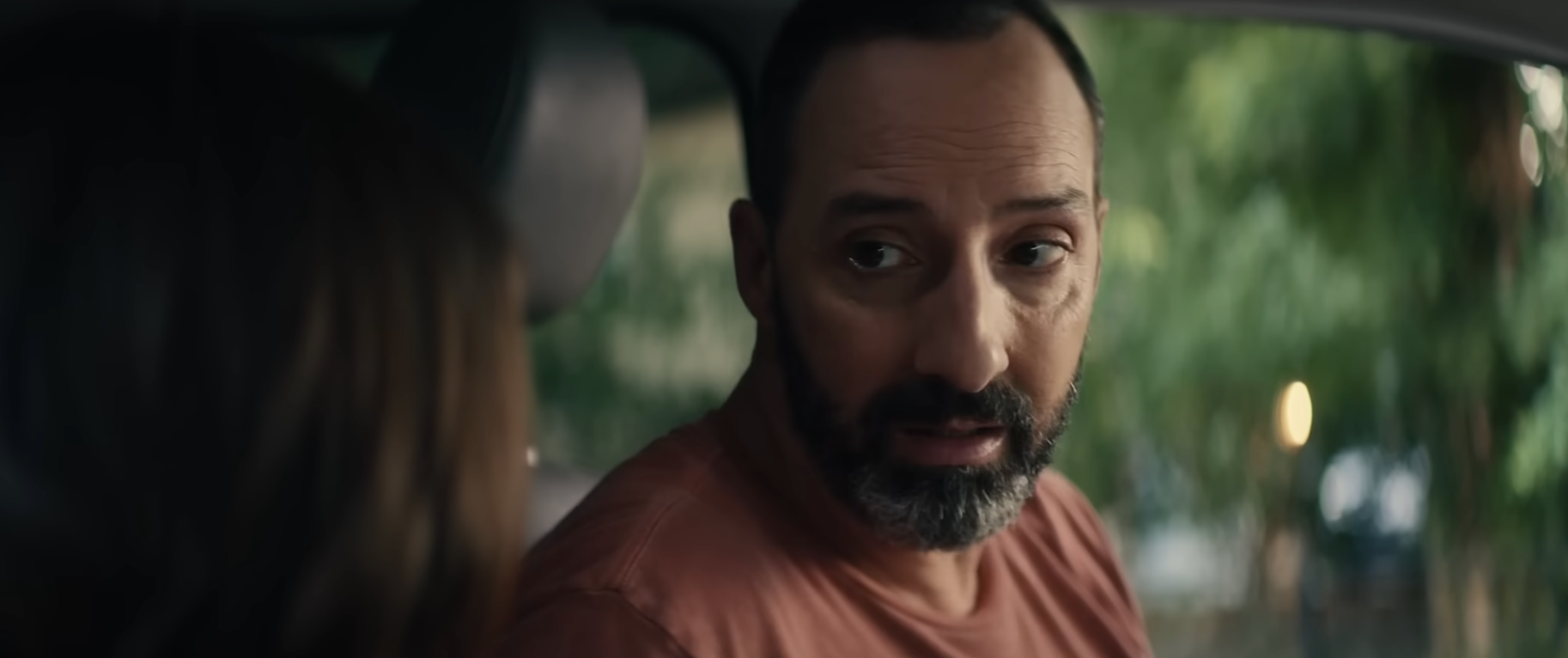
Tony Hale in Sketch. Image courtesy of Angel Studios.
Why Sketch Almost Didn't Get Made
Steve Taylor's connection to Seth goes back more than two decades.
Steve Taylor: I first met Seth when he was nineteen years old. His father asked if I would watch his demo reel.
I went in with low expectations.
I came away stunned.
Even then, everything Seth has become as a filmmaker was already visible.
Years later, he sent me the first act of Darker Colors. My immediate reaction was, "This is really good. I need to know what happens next."
After years of development in Hollywood, the project eventually stalled.
When Seth told me the movie was dead, I said, "No. It's too good to be dead."
I believed there was a way to make it independently if we were willing to be scrappy.
Eventually, that's exactly what happened.
Tony Hale: It was a difficult pitch because people couldn't categorize it.
It wasn't The Babadook because it had humor.
It wasn't Goosebumps because it had emotional depth.
People struggled to understand what it was.
Fortunately, people eventually took a chance on us.
Humor, Grief, and Real Family Life
Many audiences know Tony Hale from comedic roles, but Sketch allowed him to explore something more personal.
Tony Hale: This is probably the closest character to who I am.
I'm a father. I've spent plenty of time in therapy. Seth often says that some of the funniest people are also people who have been through the hardest things.
We don't always connect humor and grief, but they belong together.
Sometimes the emotional stakes become so intense that you need a joke to let some air out of the balloon. That's how real life works.
That's certainly how I experience life.
Not Horror. Adventure.
One of the film's most surprising qualities is its willingness to be genuinely scary.
Tony Hale: I think it's scary, but in a Goonies kind of way.
As a kid, I remember feeling completely overwhelmed by certain moments in movies and loving every second of it.
It's not horror in the sense of Saw. It's the kind of scary that kids actually want to watch.
Dusty Brown: Think about Raiders of the Lost Ark. The faces melting at the end are almost too much when you're eight years old.
But that's part of what makes it memorable.
Some reviewers have called Sketch "gateway horror for kids," and honestly, we love that description.
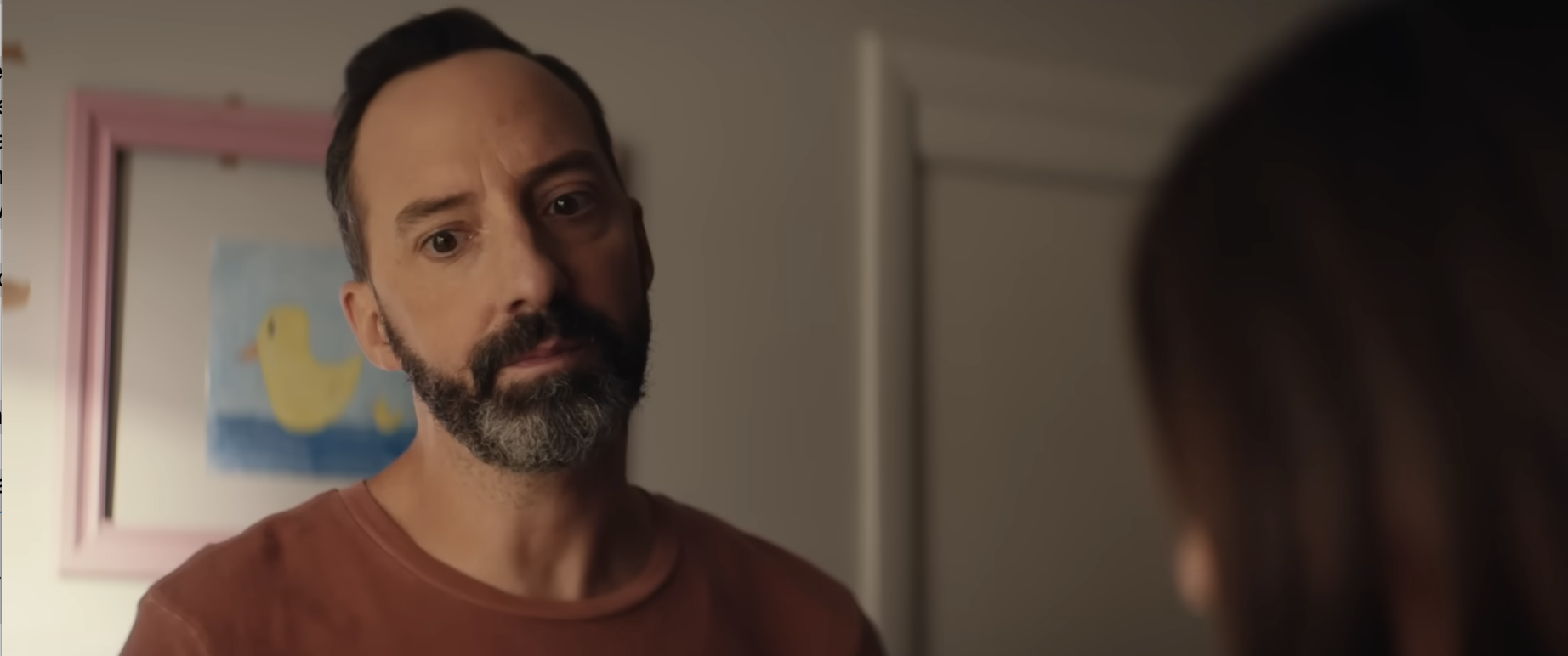
Tony Hale in Sketch. Image courtesy of Angel Studios.
Respecting the Audience
One of the film's strengths is its refusal to talk down to children.
Wedgwood Circle: The film trusts both adults and kids to engage with it fully.
Tony Hale: That was always the goal.
We wanted a genuine family experience.
When my daughter was younger, there were plenty of movies I had to watch over and over that weren't exactly made for parents.
We wanted to create something where kids would be entertained and adults would genuinely enjoy it too.
The Gift of Creative Freedom
The team believes the film's originality survived largely because they were able to protect Seth's vision.
Tony Hale: That's one of the gifts of making the movie the way we did.
Sometimes when a project enters a larger studio system, the original vision gets softened or reshaped.
Seth was able to maintain creative control, and that's a massive gift.
Why Original Stories Matter
As the conversation turned toward the broader state of filmmaking, the discussion became more personal.
Dusty Brown: There's a lot of fear in the industry right now.
Young executives often feel pressure to protect their jobs, which means established intellectual property feels safer than original ideas.
Every original film that gets made today is a minor miracle.
Organizations willing to take chances on original material are incredibly important.
Steve Taylor: Too many filmmakers spend their careers asking for permission.
Movies are expensive, but they don't have to be as expensive as the studios make them.
If you believe in the story and you're willing to do the work, there are ways to get things made.
You simply can't wait for someone else's approval.
The Importance of Community
As the conversation wrapped up, the group returned to a theme that resonates deeply with Wedgwood Circle: community.
Tony Hale: I honestly don't think we would have stayed with this project without community.
You need people around you who genuinely believe in the work.
The business itself doesn't really see you. It doesn't care about you.
What keeps people going is being surrounded by others who do.
People who see you.
People who see the story.
People who remind you why you're doing it.
That's what carried this project forward.
Steve Taylor: At the premiere, it was remarkable to see how many people showed up because they love Tony and want this film to succeed.
That kind of support says something.
Tony Hale: Those relationships are what keep all of us going.
"The business doesn't really see you. You have to surround yourself with people who do."
— Tony Hale
Sketch is now streaming, offering audiences something increasingly rare: an original story that trusts children, respects adults, embraces imagination, and refuses to fit neatly into a category. In an industry often driven by familiarity, Sketch reminds us that some of the most memorable stories begin with someone willing to draw outside the lines.