Virginia Evans on Writing, Rewriting, and the Long Road to The Correspondent
After seven unpublished novels and decades of honing her craft, Virginia Evans became one of the literary world's most celebrated new voices. Her debut novel, The Correspondent, won the PEN/Hemingway Award and the 2026 Women's Prize for Fiction before eventually reaching the top of The New York Times bestseller list.
At Good Lit, Wedgwood Circle's annual gathering for readers and writers, Allison Trowbridge sat down with Evans to discuss creativity, perseverance, and why writing often feels like being chased by something you cannot escape.
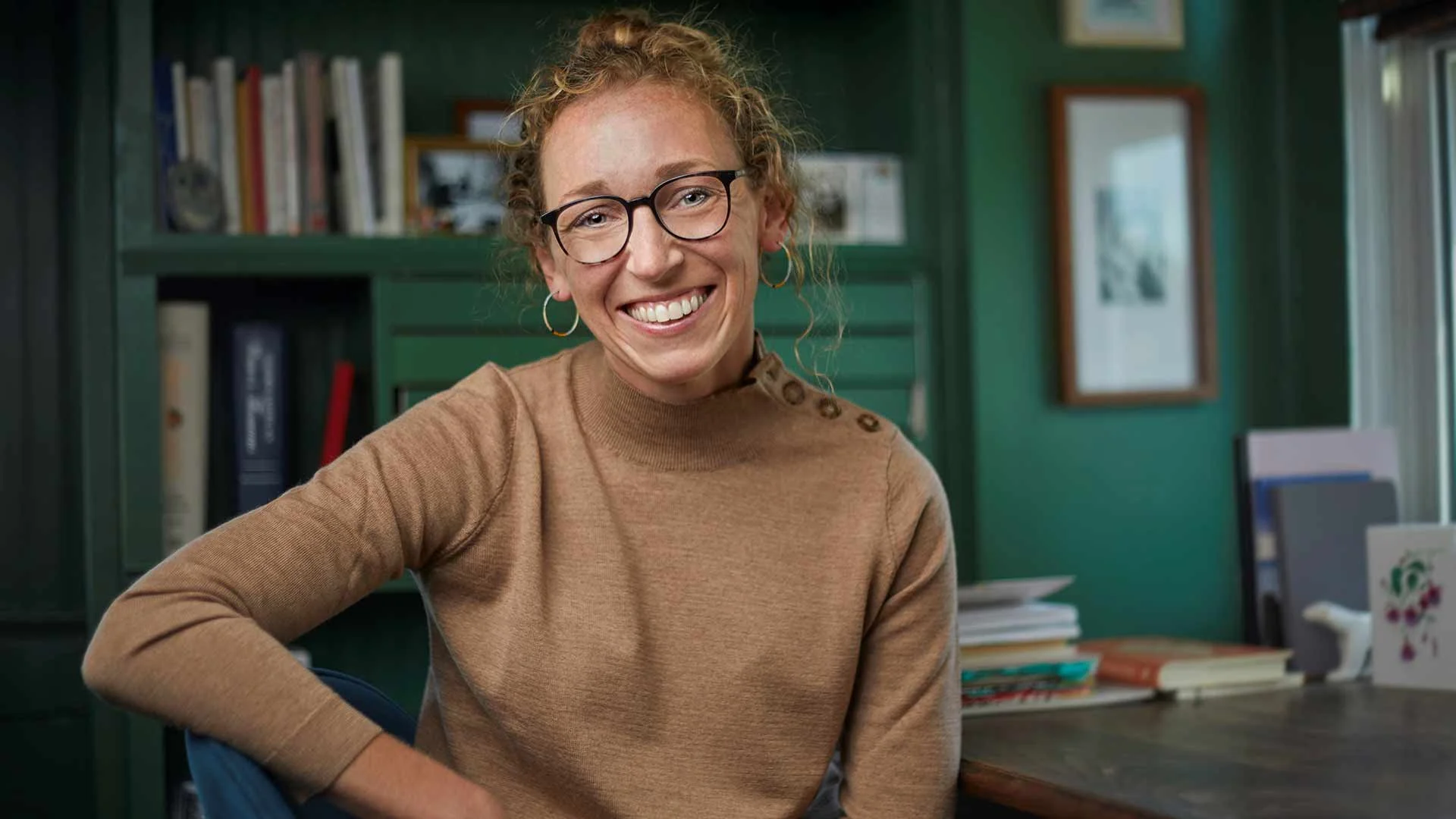
Virginia Evans © Austin Joffe
Writing the Book She Wanted to Read
The idea for The Correspondent began with another beloved book.
Evans had long admired 84, Charing Cross Road, the classic collection of letters between a New York writer and a London bookseller. She loved the intimacy of the format and wondered what might happen if that same approach were expanded into a larger, deeper story.
"I wanted to read a book that was broader and more expansive in that format," Evans said. "There is something relaxing about letters. The breaks on the page make you feel like you're moving through the story differently."
Writing during the isolation of COVID only reinforced the impulse. The fragmented nature of life at the time seemed perfectly suited to an epistolary novel.
Like many writers, Evans begins with the books she wishes existed.
"There is a Zadie Smith idea that you end up writing what you want to pick up and read. That's always been true for me."
The result was The Correspondent, the story of Sybil Van Antwerp, a retired attorney whose life unfolds through letters, emails, and decades of correspondence.
Why Real Authors Appear in the Novel
One of the novel's most delightful surprises is Sybil's habit of writing letters to famous authors, including Ann Patchett, Joan Didion, and Larry McMurtry.
The inspiration came from Evans' own life.
Whenever she loves a book, she writes to its author.
"I've always done that," she said. "I write to tell them what their book meant to me and why it mattered."
Years ago, she wrote to Ann Patchett about Commonwealth. Patchett wrote back, and the two have been exchanging letters ever since.
That relationship eventually found its way into the novel.
The only challenge came when deciding whose voices could appear on the page.
"The only real people I wrote in the voice of were people who are no longer living," Evans explained. "You can write in the voice of someone who has passed away. You cannot write in the voice of someone who is living."
Looking back, she laughs at the audacity of attempting to write as Joan Didion.
"That's such a ridiculous thing to do. It's a very aggressive choice to say, 'I'm going to pretend I'm Joan Didion.'"
Fortunately for readers, the gamble paid off.
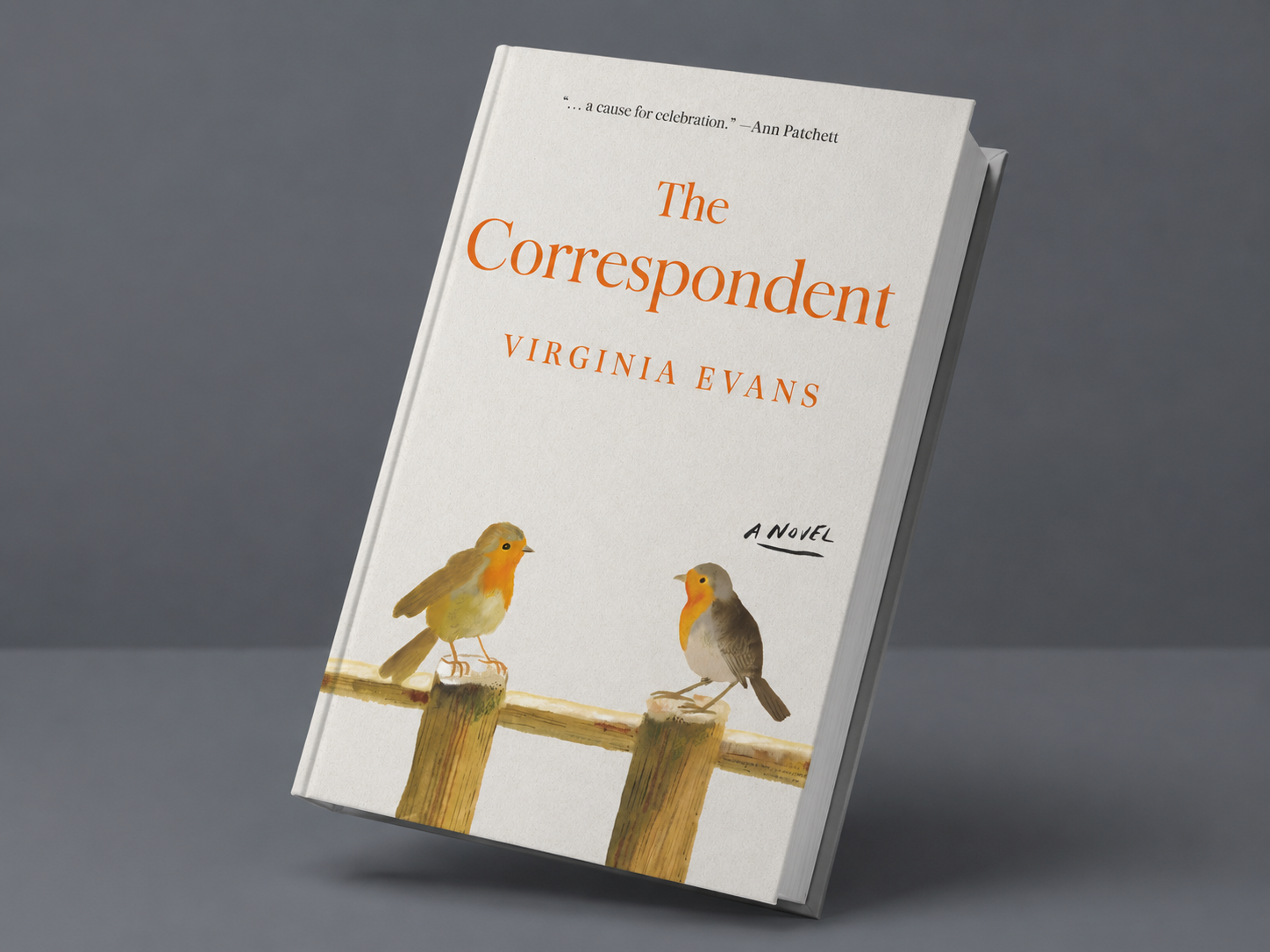
Image by Penguin Random House
Collecting Marbles
When asked about her writing process, Evans offered one of the most memorable descriptions of creativity imaginable.
She sees herself as someone constantly gathering observations from everyday life.
"I feel like I'm walking through the world picking up marbles off the ground," she said.
The strange comment overheard in a grocery store. A fleeting moment of beauty. An unexpected interaction. All of it gets collected and stored away.
"I'm tossing all these things into a bucket inside me. Then eventually, when it's time to write, I start looking through them and asking, 'What's interesting? What's worth exploring?'"
A compelling idea, however, is only the beginning.
One of her professors at Trinity College Dublin often warned students not to confuse a good idea with a good book.
"A good idea is part of a good book," Evans recalled. "But then you still have to write a compelling, thoughtful, page-turning novel."
The Lump of Clay
Evans' favorite metaphor for writing comes from pottery.
A first draft, she says, is not a book.
It's a lump of wet clay.
"My first drafts are terrible," she admitted. "They're messy and unfinished. What I have at the end is basically a wet blob."
The real work begins afterward.
Draft after draft, she reshapes the material, pushing and pulling until the story begins to take form.
Sometimes the entire structure collapses.
Sometimes it must be rebuilt from scratch.
But the clay remains.
"You build it again. You build it again. You keep asking what isn't working. What's false? What's weak? What's missing?"
Unlike many novelists, Evans doesn't outline.
She writes her way into the story, discovering it as she goes.
Only after the second draft does she begin inviting trusted readers into the process.
"I love criticism," she said. "I want to know what doesn't work."
Years of rejection taught her not to fear difficult feedback.
"Bring it. I'm happy to hear it."
Seven Unpublished Novels
Before The Correspondent became an award-winning bestseller, Evans spent years writing books that never found publishers.
Seven complete novels remained unpublished.
Yet quitting never seemed like an option.
"If you're meant to write, you'll write until you die," she said.
For Evans, success was never the primary motivation.
The goal was always the work itself.
"I don't think the ambition was to have a lucrative career. The ambition was to write good novels."
Writing became less of a career choice and more of a calling.
"To me, it always felt like being chased by something," she said. "You better run."
When Success Finally Arrived
Most books arrive with a burst of publicity before gradually fading from view.
The Correspondent did the opposite.
Month after month, readership grew.
Book clubs embraced it. Word spread. Awards followed. Sales accelerated.
By the time Evans spoke with Wedgwood Circle, the novel had become one of publishing's most unexpected success stories.
Industry veterans repeatedly told her they had rarely seen a debut gain momentum in quite the same way.
For Evans, however, the experience has been both exhilarating and exhausting.
"This has taken the bone marrow out of my family," she said candidly.
The demands of bestseller status have filled her calendar with interviews, appearances, travel, and endless conversations.
The very things she loves most, writing, family, community, and service, suddenly compete for attention.
Yet she remains deeply grateful.
"I feel like God has given me a moment," she said.
That moment has included opportunities to speak publicly about her faith, her vocation, and the values that shape her life.
Recently, she spent an hour speaking with a reporter about how her relationship with Christ informs the way she lives and writes.
"I feel like I've been given a voice for a season," she said. "My job is to be faithful to it."
Still, she admits she is looking forward to quieter days.
"I'll be happy when the tide goes back out and I can return to my hermit ways."
"If you're meant to write, you'll write until you die."
— Virginia Evans
For aspiring writers, Evans' story is a reminder that creative success rarely arrives overnight. Behind the bestseller lists and literary prizes are years of unseen work, abandoned drafts, difficult revisions, and persistent faithfulness to the craft. The Correspondent may be Virginia Evans' debut novel, but it is the product of a lifetime spent learning how to listen, observe, and keep writing.